How Much Does Chopstick Making in Tokyo Cost? (2026 Prices)
Chopstick making in Tokyo costs $3 to $34 per person as of August 2026, and the cheapest tour I'd actually book myself is the $3 Asakusa class. That spread is wide enough to be confusing if you're comparing listings side by side, so this guide breaks down exactly what drives the price, what the extras actually cost, and where the real value sits once you factor in what each studio gives you for the money. I have booked, watched, and priced these classes across four Tokyo neighbourhoods for this site, and the number that matters most is the one nobody puts on the listing page: what a workshop pair costs you against simply buying a finished pair at a specialist shop.
Quick answer
As of August 2026, chopstick making in Tokyo runs $3 to $6 per person at the two Asakusa studios and $23 to $34 at the central studios in Shinjuku, Ginza, Shibuya and Taito. The single most typical price a first-time visitor pays is around $25.
Key takeaways
- Real price range: $3 at the cheapest Asakusa listing up to $34 at the Shinjuku ZEN class
- Standard wood and basic tools are included everywhere; premium species and engraving cost extra
- The extra cost people forget most: name engraving, about ¥1,100 (roughly $7) where it's offered
- The cheapest genuine way in is the Asakusa workshop at $3 per person
- Best value tier: the artisan-led Taito workshop at $25, small groups with a working craftsman
- Prices shift with wood choice and season; the live price on the booking page always governs
Price Overview (2026)
Six real workshops, priced per person, verified against each studio's live listing in late July 2026. Rate used for ¥ conversions: roughly ¥157 to the dollar, as of August 2026.
| Tour type | Duration | Price per person | What's included |
|---|---|---|---|
| Asakusa workshop | 1 hour | from $3-6 | Standard wood, tools, English-speaking instruction |
| Engraving workshop | 1 hour | from $3-6 | Standard wood, tools, name engraving option (~¥1,100 extra) |
| Artisan-led Taito workshop | 1 hour | from $25 | 3 of 10+ woods included, small-group artisan instruction |
| Ginza workshop | 1 hour | from $25 | 3 of 26 woods included, English-speaking staff |
| Shibuya workshop | 1 hour | from $23 | Basic woods included, step-free studio |
| Shinjuku ZEN class | 1 hour | from $34 | Standard wood, tools, central tenth-floor studio |
Every price above is confirmed against the studio's own live listing as of August 2026. A standing disclaimer for all six: prices shift with wood choice, season, and platform promotions, so treat this table as a snapshot and let the live price on the booking page have the final word.
The gap between the two studio formats is the single biggest thing to understand before you compare listings. The two Asakusa studios price at $3-6 because they run a leaner, higher-volume model, smaller staff overhead, a simpler booking flow, and frequent promotional discounting off a $6 list price. The four central studios in Shinjuku, Ginza, Taito and Shibuya price at $23-34 because they include more staff attention per guest and, in Shinjuku's case, rent in a central office tower.
Neither platform is charging more for a better chopstick; the wood you plane and the technique you're taught is functionally the same craft at every price point on this list. What changes is the room, the staff ratio, and the wood selection on offer.
Solo Traveler
One person, the cheapest genuine option: the $3 Asakusa class plus nothing else, since standard wood and tools are included. Total: about $3. Add engraving at the sister workshop and the same solo trip runs about $10 once you convert the ¥1,100 add-on.
Couple
Two people at the mid-tier Ginza or Taito artisan studio, $25 each, both keeping standard included wood: $50 total. Add one premium wood upgrade for a special pair and budget an extra $10-20 depending on the species, landing the pair around $60-70 for two chopstick pairs plus a shared hour of instruction.
Family of Four
Two adults and two children old enough to hold a plane safely (most studios set the guided-adult threshold around age 9) at the Asakusa workshop, $3 per person if pricing is flat, or realistically $4-6 each once any per-child variation is applied: roughly $16-24 for the group. The same family at the Shinjuku ZEN class would run closer to $130-140 total, which is the clearest illustration of how much the studio choice itself swings the bill.
What Affects the Price
Six real factors move the number you actually pay, roughly ordered by how much they swing the total.
- Studio format and location: the two Asakusa listings run leaner and cheaper by a wide margin ($3-6) than the four central studios ($23-34); a tenth-floor Shinjuku studio costs more to run than a small Taito shopfront
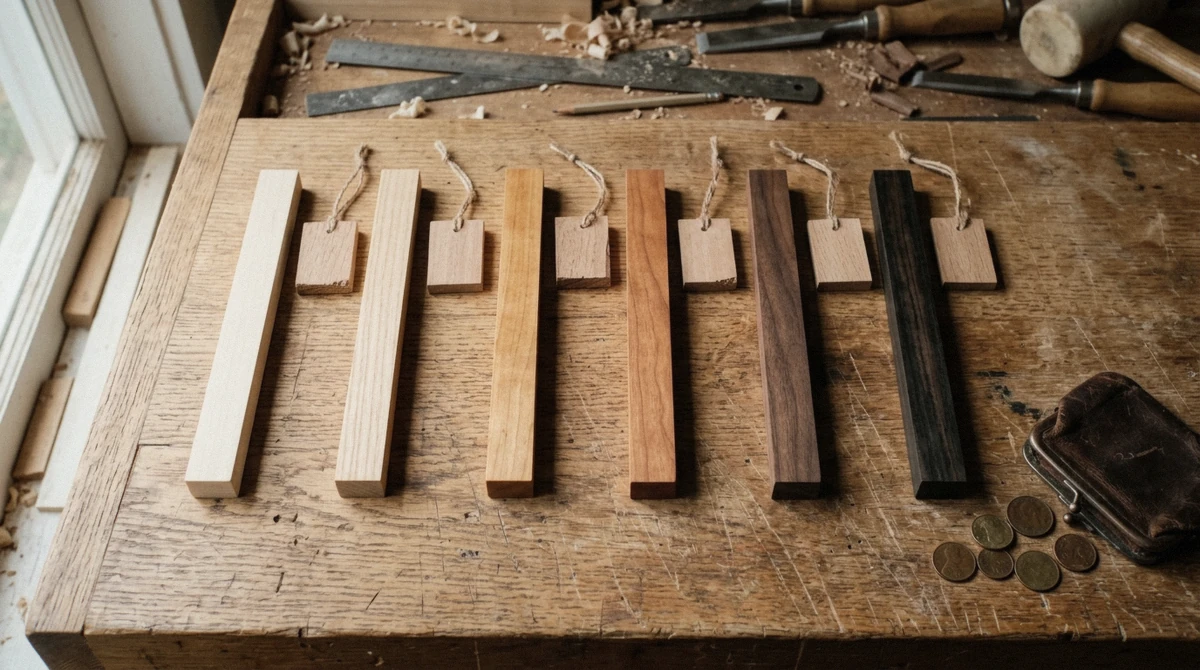
- Wood species: three included woods is standard everywhere; premium species like the Ginza studio's Yakusugi cedar and Pink Ivory (from its 26-wood selection) carry a surcharge that isn't itemized on most listing pages
- Name engraving: about ¥1,100 (roughly $7 as of August 2026) as an add-on at studios that offer it, which is a meaningful jump on top of a $3-6 base price and a smaller one on top of a $23-34 base
- Group size: private or small-group formats (the Taito artisan class caps around ten) generally price higher per person than larger shared sessions
- Booking channel: booking direct through the studio's own online listing avoids the markup that hotel concierge desks commonly add for arranging the same activity
- Weekend vs weekday slots: weekend morning slots at the popular Asakusa workshop fill first and can carry less discount availability than weekday sessions
One factor that does not move the price on any of these six listings: season. Unlike an outdoor activity at the mercy of cherry blossom crowds or typhoon season, an indoor one-hour craft class runs the same price in January as in August. If you're budgeting a Tokyo trip around seasonal price swings elsewhere, chopstick making is one line item you can plan without worrying about a peak-season markup.
Budget, Mid-Range, Premium
Three real tiers, mapped to the six studios rather than invented brackets.
- Budget ($3-6): the Asakusa workshop and its engraving sibling, both in the same old-town neighbourhood near Senso-ji. What you give up next to the pricier studios is mostly ambiance and staff-to-guest ratio, not the core teaching
- Mid-range ($23-27): the artisan-led Taito workshop, the Ginza workshop and the Shibuya workshop at $23. This tier buys closer one-on-one guidance, step-free access in Shibuya and, at Ginza, a genuinely large wood selection
- Premium ($34): the Shinjuku ZEN class, the most-reviewed class in Tokyo at 3,855 reviews, run from a tenth-floor studio in central Shinjuku
The honest trade-off: the budget tier does not skimp on the actual craft, planing and sanding your own pair is the same process everywhere, but it trims the extras (staff attention, studio polish, wood selection) that the premium tier adds. Nobody is getting a worse chopstick at $3 than at $34, just a plainer room and a shorter wood list.
The Cheapest Chopstick Making Tours in Tokyo Worth Booking
Ranked by ascending real price, the classes I'd actually recommend, not just the rock-bottom number.
Asakusa workshop, from $3
The cheapest genuine option in the city and the one I point first-timers to. A calm old-town studio near Senso-ji, 4.9 stars from 1,111 reviews, standard wood and tools included, finished pair in about an hour. What it gives up next to the pricier studios: no premium wood selection built into the listing and a plainer studio setting.
Engraving workshop, from $3-6
Same neighbourhood, same base price band, 4.8 stars from 736 reviews, with the option to add your name for about ¥1,100. What it gives up: it's a newer, smaller-review listing than its Asakusa sibling, so the review base is thinner even though the rating is close.
Artisan-led Taito workshop, from $25
The jump from $6 to $25 buys real one-on-one time with a working chopstick artisan rather than general studio staff, plus a choice from 10+ woods with three included. What it gives up: it costs roughly four to eight times the Asakusa base price for a session that still runs about an hour.
Ginza workshop, from $25
Similar price to the Taito class, but trades artisan one-on-one time for the largest wood selection on this list, 26 species including Yakusugi cedar and Pink Ivory. What it gives up: those standout woods still carry a surcharge on top of the $25 base, so the headline price undersells what a premium pair actually costs here.
Notice what's missing from this ranked list: the Shinjuku ZEN class and the Shibuya workshop, priced at $34 and $23 and neither the cheapest nor the best value once you weigh price against what's included. They're excellent studios in their own right, the Shinjuku class especially, with the deepest review base on this entire page, but they don't belong in a cheapest-tours list on price alone, and I'd rather leave them out than stretch the definition of "cheap" to fit them in.
A quick side-by-side of what you get and give up at each real price point, plus the shop-bought alternative for contrast.
| Option | Price | What you get | What you give up |
|---|---|---|---|
| Asakusa workshop | from $3 | Cheapest genuine class, 4.9★ from 1,111 reviews | No premium wood built into the price, plainer studio |
| Engraving workshop | from $3-6 | Personalised name engraving option (~¥1,100) | Smaller review base (736) than its Asakusa sibling |
| Artisan-led Taito workshop | from $25 | One-on-one time with a working artisan, 10+ woods | 4-8x the Asakusa base price for a similar hour |
| Ginza workshop | from $25 | 26-wood selection, the widest on this list | Premium species still cost extra on top of the base |
| Buying at Ginza Natsuno (no class) | from ¥3,300 (~$21) | A finished, shop-quality pair in minutes | No making experience, no story to tell about it |
When Cheap Costs You More
The real trade-offs at the $3-6 tier are cosmetic, not a safety concern: a plainer room, a shorter wood list, and staff spread across a slightly larger group than the artisan-led Taito class. There is no licensing or safety differentiation by price here; a chisel-and-plane craft class isn't a regulated activity the way a boat tour or a zip line is, so "cheap" at this workshop means fewer extras, never a corner cut on your safety at the bench. What cheap can cost you is choice: if you specifically want a rare wood or a one-on-one artisan pace, the $3-6 tier won't offer either.
Extra Costs to Budget For
The listed price is rarely the whole story. Here's what to add on top, with real numbers.
- Premium wood upgrade: not itemized consistently across listings, but expect a real surcharge at any studio offering rare species; the Ginza studio's Yakusugi cedar and Pink Ivory sit well above the three standard included woods
- Name engraving: about ¥1,100 (roughly $7 as of August 2026) at the studios that offer it as an add-on
- Transport to the studio: a Tokyo Metro or JR fare, typically ¥170-320 (about $1-2) each way depending on distance, since none of these studios are far from a station
- Tipping: not customary in Japan at craft studios; do not add a tip line to your budget here the way you might elsewhere
- Kids' pricing: not consistently broken out by studio on the listing pages; check the specific booking page rather than assuming a flat rate applies to a child
- A second pair for a travel companion who isn't booked: most studios charge the same per-person rate for each extra participant, there is no bulk discount built into these small-group classes
Two things worth flagging plainly because they surprise people. First, nothing about this activity requires cash on the day; every studio on this list takes payment through an online checkout at booking, so the number you see at booking is the number you pay, engraving and wood upgrades included if you select them in advance. Second, none of these studios charge a facility or booking fee on top of the listed price the way some larger attractions do, so the price you see is close to the true total before transport and any optional add-on.
Workshop vs Buying: The Souvenir-Value Math
This is the comparison the listing pages never make, and it's the one that actually tells you whether a workshop is worth the money next to simply buying chopsticks.
| Option | Price | What you get | What you give up |
|---|---|---|---|
| Workshop + engraving (budget tier) | about $10-13 | A pair you shaped yourself, personalised with your name | No lacquer finish, plain wood grain only |
| Ginza Natsuno house pair | from ¥3,300 (~$21) | A shop-finished pair, no time investment | No making experience, generic to any buyer |
| Ginza Natsuno Wakasa-nuri lacquered set | ¥70,400 (~$449) | A master-lacquered heirloom-grade set | Far above what most travelers will spend on chopsticks |
| Ginza Natsuno snakewood, gold and silver inlay | ¥91,800 (~$585) | The shop's premium showpiece tier | A price point most souvenir budgets never approach |
Do the math and a workshop pair with engraving, at $10-13 total, lands you well under even Ginza Natsuno's entry-level ¥3,300 house pair, while adding something no shop purchase can: the hour you spent making it. That is the honest souvenir-value case for the class over the shop. Natsuno, near Ginza Station, stocks more than 3,000 chopstick varieties and 1,000-plus rests, so if a workshop pair leaves you wanting the finished, professionally lacquered version too, that's the shop to browse afterward, not a sign the class wasn't worth it.
For the full wood-and-engraving breakdown, see handmade chopsticks in Tokyo as a souvenir.
The math holds even at the pricier central studios. A $25 Ginza or Taito class with a premium wood upgrade, say an extra $10-15 for one of the rarer species, still lands around $35-40 total, roughly the price of a mid-shelf finished pair once you're past Natsuno's absolute entry tier and into anything with a distinctive grain or a lacquer accent. The class starts to lose the value argument only once you stack multiple upgrades, premium wood plus engraving plus a rush booking fee, at which point a simple shop-bought pair genuinely becomes the cheaper way to leave Tokyo with good chopsticks.
For most travelers that stacking never happens; the base class plus one add-on is where nearly everyone lands.
How to Pay Less
Six real tactics, each with a number attached.
- Book two to three days ahead for a weekday slot; the Asakusa workshop's best weekday morning times generally have more open availability than weekend mornings
- Choose a weekday over a weekend where the schedule allows; weekend slots at the busiest studio (1,111 reviews) fill first and give you less room to compare prices before committing
- Skip the engraving add-on if a plain pair is fine; that alone saves the roughly ¥1,100 (about $7) most engraving options charge
- Stick to the three included wood options rather than upgrading to a premium species, which avoids an unlisted surcharge that can run into double digits depending on the wood
- Compare group breakeven: a two-person booking at a per-person-priced studio costs exactly double a solo booking here, since none of these six classes offer a group discount tier, so there's no minimum group size to chase for savings
- Use free cancellation to hold a slot early without locking in the spend; every workshop on this list cancels free up to 24 hours ahead, so booking early costs nothing if your plans shift
There is no meaningful do-it-yourself version of this activity. Chopstick planing needs a kanna, a clamped jig and taught technique that isn't something you rent and try alone in a hotel room, so the honest budget-saving path here is choosing the right studio tier, not skipping the class for a DIY alternative.
Is It Worth the Price?
At roughly one hour per class, the per-hour value math is straightforward: $3-6 buys an hour of guided craft time at the Asakusa tier, $25-34 buys the same hour with more attention and wood choice at the pricier studios. Either way you're paying for one focused hour and one finished pair you take home the same day, with no shipping line on the bill, not a half-day excursion. Budget travelers with a firm ceiling should look at the $3-6 Asakusa tier first; short-stay visitors juggling a packed single day should weigh whether an hour indoors beats an hour at a sight they can't get anywhere else.
For the fuller honest-verdict treatment, including who should skip it entirely, see is chopstick making in Tokyo worth it.
Frequently Asked Questions
Can I pay with cash, or is it card only?
Both are generally accepted in person at the studio, though the booking itself is paid online by card at checkout. Carry a little cash anyway for any on-the-spot add-on like engraving.
How much extra does a premium wood upgrade actually cost?
It varies by studio and species and isn't itemized consistently across listings; the Ginza studio's 26-wood selection includes rare species like Yakusugi cedar and Pink Ivory at a surcharge above the three standard included woods. Ask at booking or on arrival for the exact figure.
Exactly how much does the name engraving option cost?
About ¥1,100, roughly $7 as of August 2026, at the studios that offer it as an add-on to the base workshop price.
Is there a discount for children's pricing?
Not consistently advertised across these six studios' listing pages. Check the specific booking page for the workshop you're considering rather than assuming a flat child rate applies.
Which studio is the cheapest to book?
The Asakusa workshop, from $3 per person as of August 2026, is the cheapest genuine option among the six studios this guide tracks.
Why do the two Asakusa studios cost so much less than the other four?
It comes down to studio format, not craft quality. The Asakusa studios run a leaner, higher-volume model with lower overhead; the four central studios include more staff attention and, in Shinjuku's case, central office-tower rent. The wood and technique are the same activity at every price point.
If you only remember one number from this page, make it this one: a workshop pair with engraving costs less than a house pair at Ginza Natsuno, and you get an hour of guided craft on top. That is the actual value case, not the marketing one. Pick your tier based on what you want out of the hour, budget for the wood or engraving upgrade if you want one, and book with confidence that the price on the checkout screen, not the flattened number some aggregator shows, is the one that matters.