Handmade Chopsticks Tokyo Souvenir: Woods, Engraving and Price
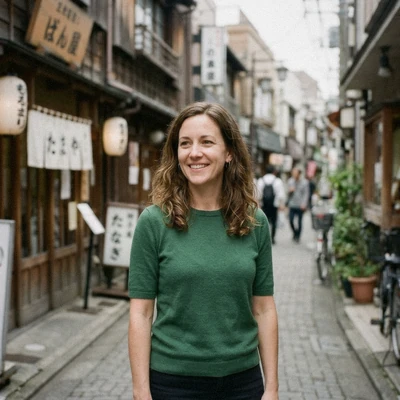
A handmade chopsticks Tokyo souvenir earns its shelf space because you made it, not because the wood is rare or the finish is flawless. I have sat through this class at four different studios across the city, and the pair I still use most at home is the plainest of the lot, cut from standard cypress at a Ginza bench on a slow Tuesday afternoon. This guide walks through what you actually get to choose at the table, which wood tiers are worth the surcharge, how the shaping happens step by step, and the honest math on whether a handmade pair beats a finished one bought at a specialist shop. By the end you will know exactly which workshop suits which gift, and you can compare every Tokyo chopstick-making studio once you have decided.
Quick answer
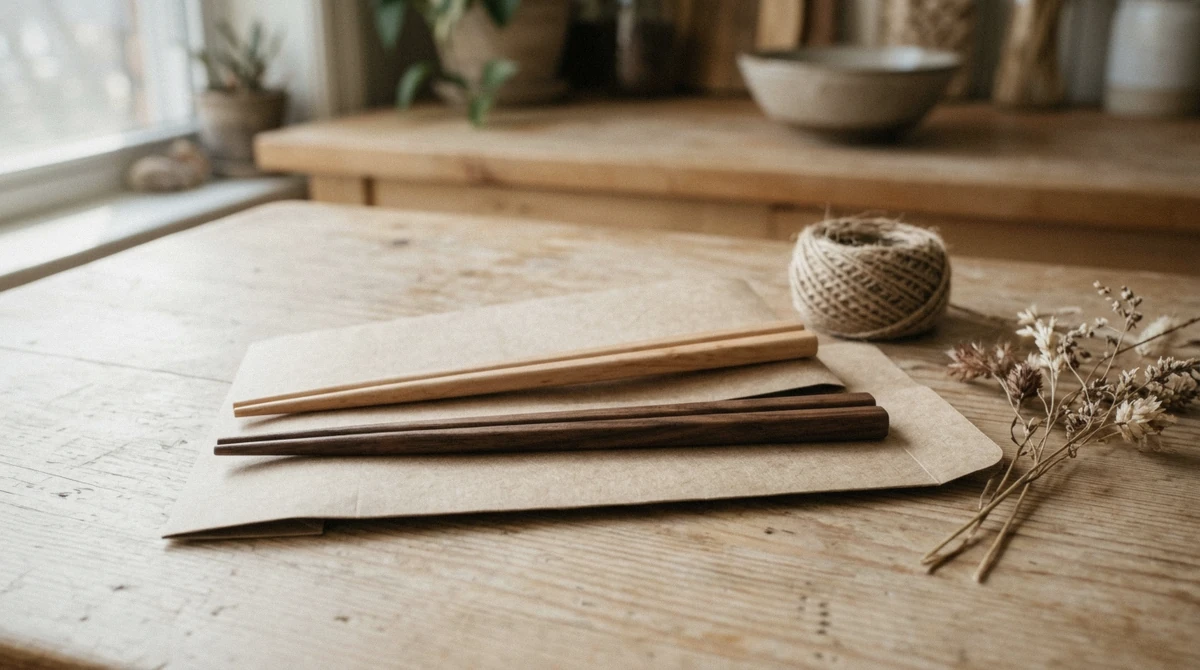
A handmade chopsticks Tokyo souvenir means a tapered, sanded, oiled pair you shape yourself in about an hour, with a wood upgrade and a roughly ¥1,100 engraving option (about $7 as of August 2026) if you want a named keepsake rather than a plain pair.
Key takeaways
- You choose the wood at the bench, three species are usually included, and the Ginza studio's in-house catalog runs to 26 species across two lengths
- Premium woods like Yakusugi cedar and Pink Ivory carry a surcharge, and at some studios only three of eleven listed woods are included free
- Name engraving costs about ¥1,100 (roughly $7 as of August 2026) and turns a plain pair into a named gift
- The finished pair is dishwasher-unsafe by design; hand washing keeps a hand-oiled pair usable for years
- A workshop pair packs fine in carry-on luggage, no special handling needed on the flight home
- The table below compares a workshop pair against buying a ready-made set at Ginza Natsuno, Japan's largest chopstick dealer
What You'll Actually Make
Every studio hands you the same basic choice sheet before you sit down, even if the exact menu varies slightly bench to bench. Here is what is actually on offer, and what costs extra.
| Choice | Options | Extra cost? |
|---|---|---|
| Wood species | 3 standard woods included at most studios; the Ginza studio's in-house catalog lists 26 species | Premium species carry a surcharge |
| Length | Two lengths offered at the Ginza studio, standard and slightly longer | No |
| Engraving | Your name burned into the shaft in kanji, katakana or roman letters | About ¥1,100 (roughly $7 as of August 2026) |
| Chopstick rest | Offered as an add-on at some studios, not universal | Varies, ask when you book |
| Gift wrapping | A simple paper wrap available on request at most studios | Usually free, ask ahead |
Nothing on that list is mandatory beyond the class itself. Most first-timers walk out with the standard wood and no engraving, which is a perfectly good souvenir on its own, and reviewers consistently say the plain pair still gets used at home for years. The upgrades exist for when a plain pair is not quite the gift you had in mind, and it is worth deciding which of them matter to you before you sit down, since the wood choice in particular is easier to make with a clear head than mid-class with an instructor waiting.
The Woods You Can Choose
Wood is where a handmade chopsticks Tokyo souvenir actually differentiates itself from a shop shelf, since you are picking the grain and the weight in hand, not just a finished object.
Standard woods, included in the base price
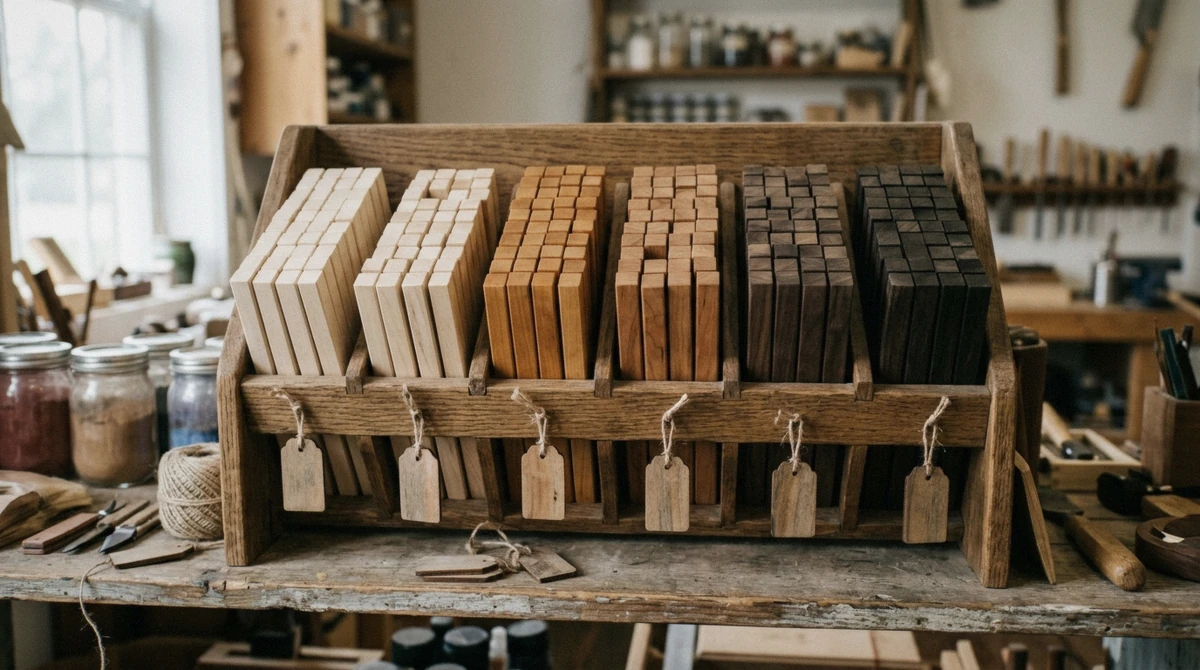
Most classes include three woods at no extra charge, and each behaves differently under the plane. Magnolia is pale, almost cream-coloured, and genuinely the lightest wood in weight of the three, which makes it the easiest blank for a first attempt since it takes the taper with less resistance under the blade. Cherry runs a warm reddish-brown with a fine, tight grain that darkens noticeably once the oil goes on, and it sits a little heavier in the hand than magnolia.
Walnut is the darkest and heaviest of the standard three, a rich chocolate brown with a visible grain pattern that some visitors find the most attractive of the included options, though its density makes it a slightly slower plane for a beginner. At some studios only three of eleven listed woods are actually included free, with everything past those three, including the species below, charged separately.
Premium woods, worth the surcharge for a gift
The Ginza studio's 26-species catalog goes well beyond the standard three, including maple with its pale, faintly golden grain, zelkova with a bold, open figure, chestnut running slightly reddish and lightweight, plus the darker hardwoods ebony, rosewood and snakewood, each noticeably heavier in the hand than any of the standard three. The two names worth knowing specifically are Yakusugi cedar, cut from ancient Yakushima cedar with a tight, striking grain and a faint natural fragrance that lingers for months, and Pink Ivory, a genuinely rare, bright pink-red hardwood dense enough to feel almost like stone against your palm, and unlike anything else on the rack. Both carry a surcharge on top of the class price, and both are the pair I would actually pay extra for if the chopsticks are a gift rather than a souvenir for myself.
How the Pair Takes Shape: Kanna, Sandpaper, Oil
The process is the same at every studio, and it is genuinely satisfying to watch happen under your own hands. Your blank, a rough, roughly squared length of wood, gets clamped into a simple wooden jig that holds the angle steady so you cannot easily wander off course. From there the kanna, a traditional Japanese hand plane, takes off paper-thin curls of wood in one smooth pull as you work all four sides down into a taper: thick enough at the grip end to hold comfortably, thin enough at the tip to pick up a single grain of rice.
Once the taper is even, sandpaper softens the tips and rounds the corners, working through a couple of grits by hand until nothing catches on your fingertip. A final coat of food-safe oil goes on last, rubbed in by hand, and it is the step that actually brings the grain to life, darkening the wood and sealing the surface against moisture. Start to finish, the whole sequence runs 45 to 60 minutes, and you take your pair home the same day.
No shipping, no waiting.
Engraving and Personalisation
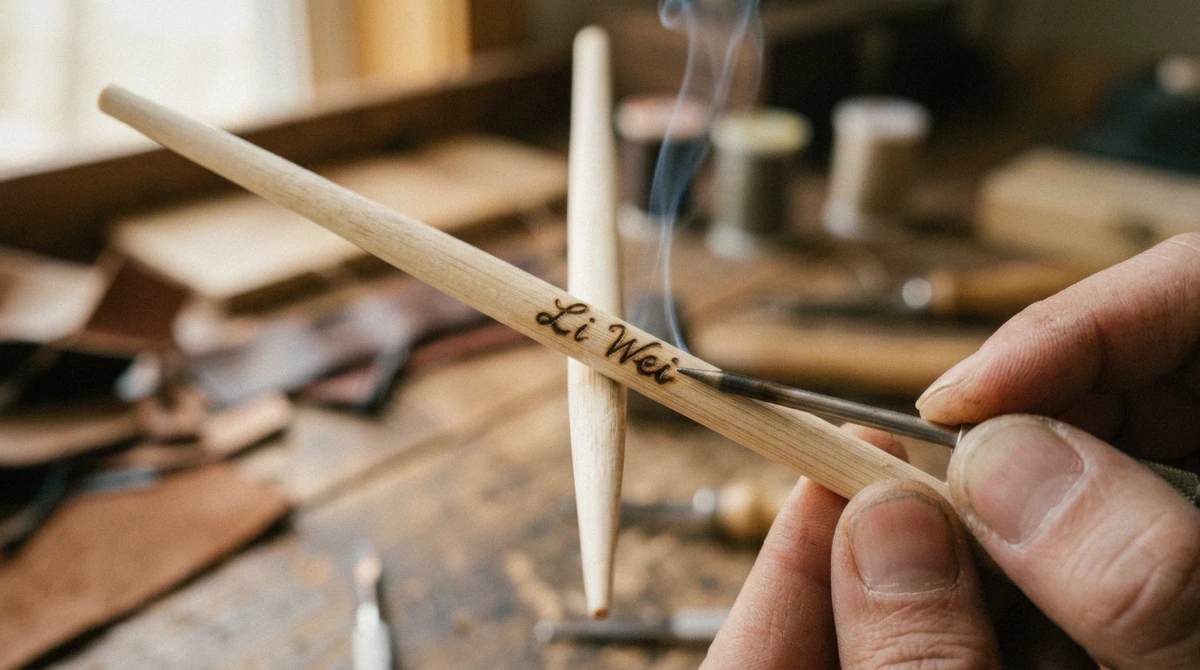
A plain pair is a nice thing to have made yourself. An engraved pair is a gift someone will actually keep. For about ¥1,100, roughly $7 as of August 2026, a studio will burn a name into the shaft, in kanji, katakana or roman letters depending on what the recipient prefers. It is a small line item against the class price, and it is the one upgrade that consistently turns a souvenir into something a person hangs onto rather than loses in a kitchen drawer.
Not every studio on this site's list offers engraving as a standard menu item. The name-engraving workshop is the one built specifically around this add-on, and it is the booking route if a named pair is the whole point of your visit rather than an afterthought decided at the bench.
Handmade vs Shop-Bought: Which Souvenir Wins
Ginza Natsuno, near Ginza Station, is Japan's largest chopstick dealer, with more than 3,000 chopstick varieties and over 1,000 chopstick rests on its shelves. It is the fair benchmark for what a shop-bought pair actually costs, from a plain starter set up to a genuine heirloom-grade gift.
| Tier | Price | What you get |
|---|---|---|
| Your own workshop pair | Included in the class price | A pair you shaped yourself, imperfections included, no two visitors' pairs come out identical |
| Natsuno house pair | From ¥3,300 (about $21) | A factory-finished starter pair, no story attached to it |
| Natsuno Wakasa-nuri set | ¥70,400 (about $448) | A lacquered, multi-layer finish, genuinely heirloom-grade |
| Natsuno snakewood, gold and silver inlay | ¥91,800 (about $583) | The shop's top tier, rare snakewood with metal inlay work |
A workshop pair will never match a Wakasa-nuri lacquer finish, and it would be dishonest to pretend otherwise; Natsuno's top tiers are made by career craftsmen with equipment and skill no one-hour class replicates. The lacquer alone on a Wakasa-nuri set goes through dozens of layers, built up and polished over weeks, a process no visitor could learn or rush through in an afternoon. What a workshop pair beats a shop pair on is the one thing money cannot buy at Natsuno's counter: the fact that you planed it yourself, from a rough blank, at a bench in the same city you are visiting. A Natsuno pair, however fine, was finished by someone else long before you ever walked into the shop.
My honest advice for a gift that needs to impress is to do both, a shop-bought Wakasa-nuri set as the polished present and your own workshop pair as the story you tell about the trip. Natsuno's regular hours, Monday through Saturday from 10:00 to 20:00 and Sunday and holidays until 19:00, make it easy to fold a visit into the same day as your class, since the shop sits close enough to the Ginza studio to walk between the two. For the fuller price-per-pair math against Natsuno's ladder, see what chopstick making in Tokyo actually costs.
Caring for Your Chopsticks Back Home
A hand-oiled pair is not dishwasher safe, and that is by design rather than a flaw. Hot water and detergent strip the oil finish faster than any amount of normal use would, softening the grain and leaving the surface feeling rough within a handful of washes. Hand wash and dry promptly after each meal instead, the same care any natural-wood chopstick needs, and avoid letting a pair sit soaking in a sink overnight. A light re-oiling every few months, a few drops of a food-safe oil rubbed in with a soft cloth, keeps the grain from drying out and the surface from roughening over years of daily use; it takes less than a minute and the wood visibly darkens again once it soaks in.
Packing them for the flight home is a non-issue: a finished pair of wooden chopsticks with rounded tips carries fine in checked or carry-on luggage, since it reads as an ordinary household utensil rather than anything restricted. Wrap the tips in a napkin or a spare sock if they are loose in a bag, mostly to protect other items from a scratch rather than out of any real fragility concern, since a properly finished pair is sturdier than it looks.
Which Workshop for Which Gift
The right studio depends on who the pair is for, not just which neighbourhood suits your itinerary.
- A named gift for one specific person: the name-engraving workshop is built around exactly this, and it is worth booking directly for the engraving rather than treating it as an afterthought.
- A classic pair on a budget, or a first souvenir with no fuss: the Asakusa workshop keeps things simple and low-cost, and it suits a couple making matching pairs just as well as a solo traveler.
- A gift for a wood collector, or anyone who cares about grain and finish over novelty: the Ginza workshop runs the deepest wood selection of any studio on this list, and it is the one to book if the species matters more than the price.
If you are making more than one gift on the same trip, it is worth splitting them across two studios rather than booking the same class twice. A named pair from the engraving studio and a Pink Ivory pair from Ginza read as two genuinely different souvenirs, even though the underlying hour at the bench looks almost identical from studio to studio.
Frequently Asked Questions
Are handmade chopsticks from a Tokyo workshop dishwasher safe?
No. A hand-oiled, unfinished pair should be washed by hand and dried right after use. Hot water and detergent strip the oil finish faster than normal use ever would.
Can my name be engraved in roman letters instead of kanji?
Yes, most studios that offer engraving will burn a name in kanji, katakana or plain roman letters, whichever suits the person you are making the gift for. Ask at booking if you have a preference.
Can I carry my finished chopsticks home in carry-on luggage?
Yes. A finished wooden pair with rounded tips carries fine in checked or carry-on bags on international flights; it reads as an ordinary household utensil, not a restricted item.
How long do handmade wooden chopsticks actually last?
Years, with basic care. Hand wash after use and re-oil every few months, and a workshop pair holds up to real daily use rather than sitting as a display piece.
Can I make two pairs in one session, one to keep and one to give away?
It depends on the studio. Some let a single participant shape a second pair for an extra charge, others expect a second seat to be booked for a second pair. Ask when you reserve if a gift pair is the plan.
Do I need to bring my own gift box or wrapping?
No. Most studios offer simple paper wrapping on request at no extra cost, though it is worth asking ahead if presentation matters to you, since not every studio keeps wrapping stock on hand at all times.
A handmade chopsticks Tokyo souvenir does not need to be perfect to be worth making. The plainest pair from the cheapest studio still beats anything off a shop shelf, because nobody else in the world has one exactly like it. If a name and a rarer wood matter to your gift, budget the small surcharge for both and book the studio built around it.