Shinjuku Chopstick Making Class at ZEN Workshop
The ZEN Chopsticks Workshop runs on the tenth floor of the Shinjuku West Building, a five-minute walk from Shinjuku-Nishiguchi Station. In about an hour you plane, sand and oil a pair of wooden chopsticks by hand, then carry the finished set home. It is the most-reviewed chopstick class in the city, and this guide covers what the session includes, what the upgrades cost, and how to book.
About the Shinjuku Chopstick Class
Cancel up to 24 hours before for a full refund
From a raw wooden blank to a finished, oiled pair
10th floor of the Shinjuku West Building, 5 min from Shinjuku-Nishiguchi Station
Instructions and safety guidance are given in English
Your chopsticks are bagged for you at the end of the class
A larger, brisk session; good for groups and drop-in timing
Why the ZEN Workshop in Shinjuku
A working studio, not a demo
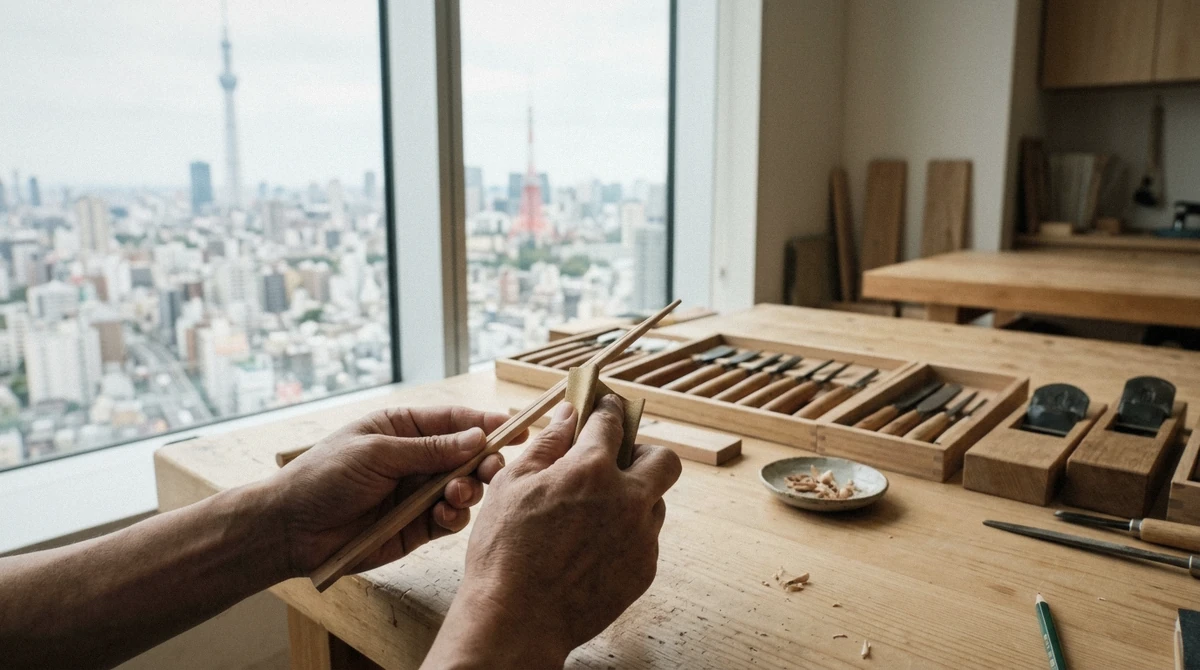
The ZEN Chopsticks Workshop sits high above Shinjuku's west side, a short walk from the Oedo Line's D5 exit. You work at a real bench with a Japanese hand plane called a kanna, the same tool furniture makers use, and you leave with a pair you will actually eat with rather than a painted keepsake.
The class earns its reputation on two things: patient English-speaking staff and a genuinely central location. If you are still weighing neighbourhoods, our guide to hands-on chopstick studios across Tokyo lays the Shinjuku, Ginza, Asakusa and Shibuya options side by side. If you are moving through Shinjuku Station between other plans, this is the easiest chopstick class in the city to slot into a gap.
What You Make in the Class
From a square blank to a smooth pair
You start with two square lengths of wood and shape them down by hand. The instructor sets you up, then stays close as you go, so there is no woodworking experience needed.
Here is what the hour actually involves.
- Choose your wood from the standard blanks included in the price
- Plane the square blank into a smooth, even taper with the kanna
- Round the corners so the chopsticks sit comfortably in the hand
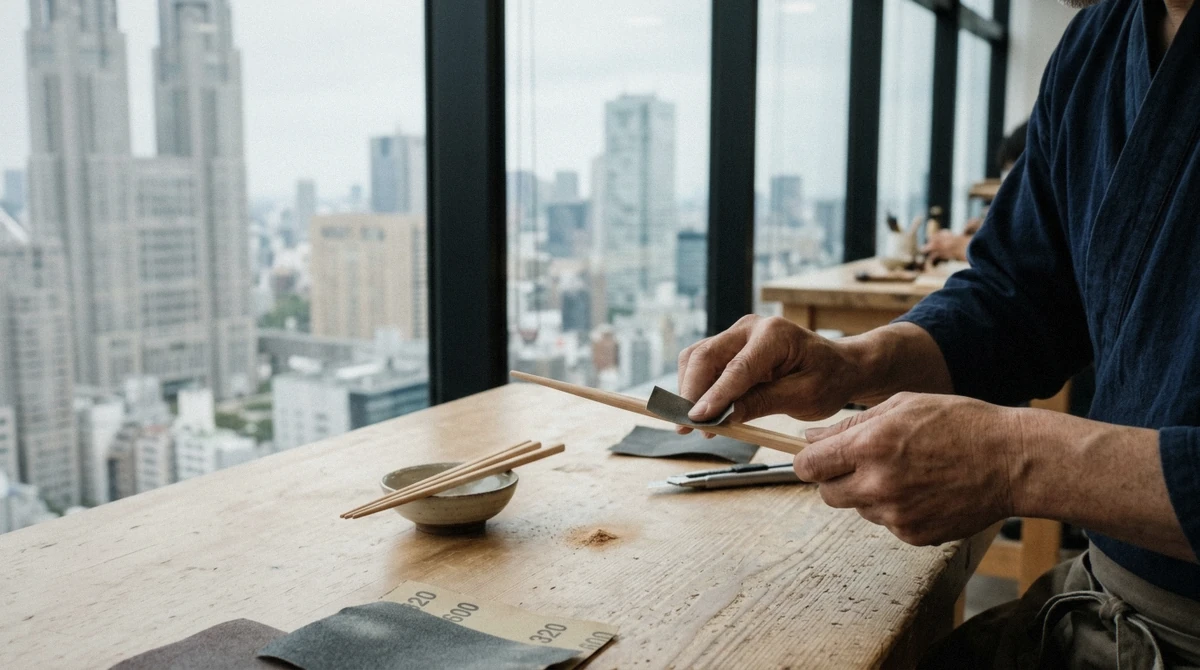
- Sand the surface through finer grits until it is smooth to the touch
- Finish with a wipe of oil so the grain shows, then take the pair home
What's Included, and What Costs Extra
The base price covers the essentials
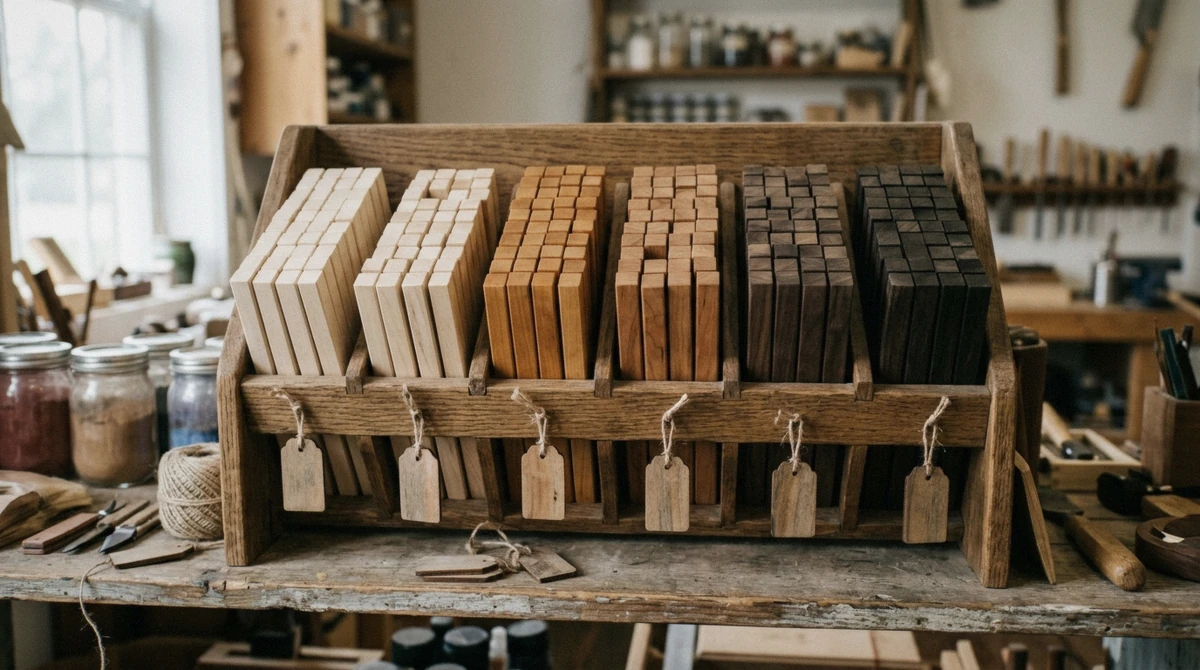
The advertised price covers the workshop, a set of standard woods, all the tools and the guidance. Two things cost extra and are easy to add on the day: premium woods with a darker or more figured grain, and personal name engraving. Deciding your budget before you sit down saves the small surprise that a few reviewers mention.
| Option | Typical cost | Worth it if |
|---|---|---|
| Class + standard wood | From $34 | You want the core experience |
| Premium wood upgrade | A few dollars more | You want a darker or figured grain |
| Name engraving | Around 1,000 yen | It is a gift or a keepsake |
Your Hour at the Bench
-
0:00
Check in and choose wood
Take the lift to the tenth floor, meet the staff and pick your blank from the standard woods.
-
0:10
Plane the taper
Draw the kanna along the square blank to shave it into a smooth four-sided taper.
-
0:30
Round and refine
Ease the corners and even out the thickness so the pair feels balanced.
-
0:40
Sand smooth
Work through the grits until the surface is silk-smooth.
-
0:50
Oil and optional engraving
Wipe on oil to lift the grain, and add your name if you upgraded to engraving.
-
1:00
Bag and go
Your finished chopsticks are wrapped for you to carry home.
Know Before You Go
A few practical notes
Nothing here is difficult, but a little preparation makes the hour smoother.
- What to wear: something you do not mind picking up a little wood dust; closed shoes are sensible at the bench
- What to bring: nothing beyond yourself; all tools and materials are provided
- Not ideal for: very young children who cannot handle a plane, though older kids do well with a parent alongside
- Not allowed: rushing the last pair through washing; give the oiled chopsticks a day or two before heavy use
Where It Is — Shinjuku West Building
Who the Shinjuku Class Suits
Best for travellers on the move
The central location and larger sessions make this the easy pick if you are already passing through Shinjuku or travelling as a group. If you would rather a quieter, artisan-led room, or an old-town setting near Senso-ji, another studio may suit you better.
- Great for: first-timers, families with older children, and groups
- Great for: anyone with a spare hour near Shinjuku Station
- Less ideal for: travellers set on a small, intimate class of under ten
Shinjuku Chopstick Class: Common Questions
How much does the Shinjuku chopstick class cost?
The class starts from about $34 per person and covers the workshop, standard woods and all the tools. Premium woods cost a few dollars more, and name engraving is usually around 1,000 yen.
How long does the class take?
Roughly one hour, from choosing your wood to a finished, oiled pair you take home the same day.
Do I need any woodworking experience?
No. The staff guide you through planing, rounding and sanding step by step, and the class is popular with complete beginners.
Where exactly is the ZEN Workshop?
On the tenth floor of the Shinjuku West Building, about a five-minute walk from Shinjuku-Nishiguchi Station on the Oedo Line, near the D5 exit.
Is the class available in English?
Yes. The studio has English-speaking staff, so instructions and safety guidance are given in English throughout.
Can children make chopsticks here?
Older children usually manage well with a parent alongside. Very young children may find the hand plane tricky, so a smaller artisan class can suit families better.
What Travellers Say About the Shinjuku Class
Easy to find right by the station and a lovely, calm hour above the Shinjuku crowds. The staff were patient and spoke great English, and my chopsticks came out better than I expected.
We dropped in between trains and it worked perfectly. Simple, hands-on and genuinely fun. I use the pair at home every week now.
Paid a little extra for engraving and it made a great gift for my partner. The whole thing took about an hour and the instructor made it very relaxed.